
Gas Boiler Installation Newport: Matching Heat Output to the Way Your Home Feels
A correctly sized gas boiler can deliver more consistent heating, better comfort and efficient performance throughout your Newport home.

Why you can trust our content
We understand that the boiler industry can be confusing, with plenty of outdated or misleading information. That’s why we rely only on trusted, proven sources to guide our advice and installations:
At a glance
Why does boiler output matter for whole-home comfort?
A home can have a perfectly functional heating system and still feel uncomfortable. Some rooms may warm quickly while others take much longer, and turning the thermostat up does not always solve the problem.
When replacing a boiler, it is tempting to assume that choosing a higher output model will automatically produce a warmer home. In reality, the right boiler needs to match the property’s heating requirements. Output that is too low may struggle to meet demand, while excessive capacity is not necessarily an advantage.
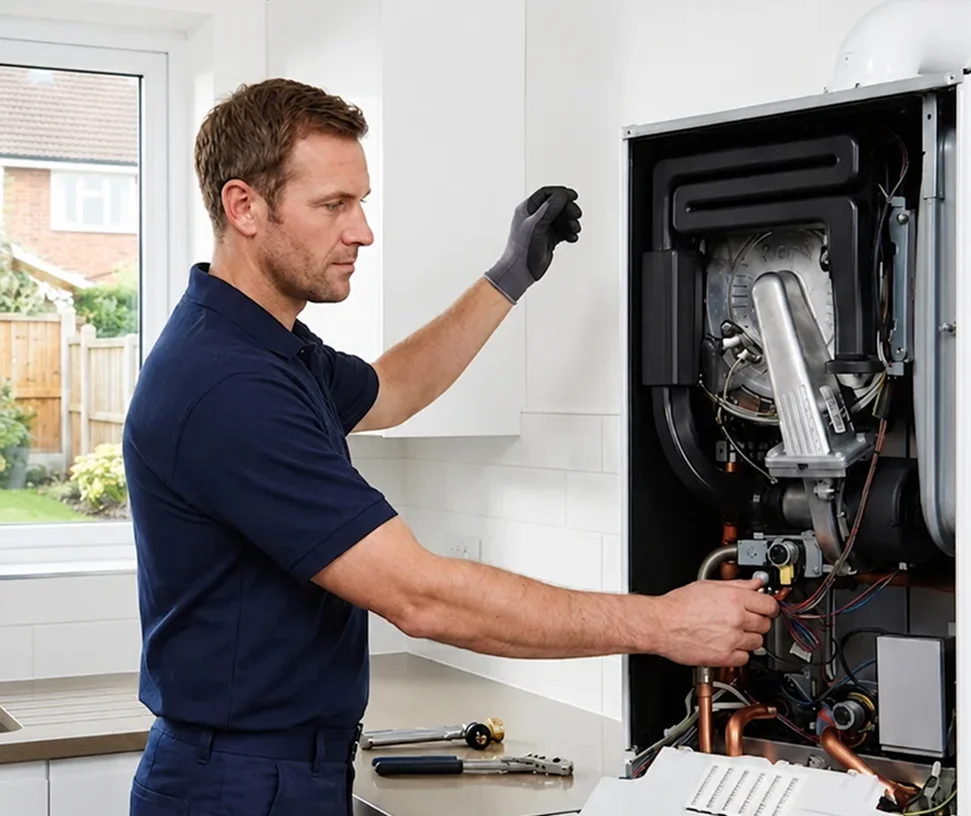
Good gas boiler installation newport starts with understanding how the property loses and uses heat. Room size, insulation, radiators, pipework, hot water demand and controls can all influence the result.
If your home has persistent cold spots or slow heat-up times, Valley Gas can assess the existing heating system and explain whether the boiler is actually the source of the problem.
What does boiler output actually mean?
Boiler output is generally measured in kilowatts, or kW. It indicates the rate at which the boiler can provide heat for the heating system or hot water.
The appropriate output depends on what the boiler needs to do.
For central heating, the requirement is influenced by the property’s heat loss. Hot water demand can be a separate consideration, particularly with combi boilers, where the appliance heats mains water as it is needed.
Important factors include:
- Number and size of rooms
- Property construction
- Insulation
- Number of radiators
- Existing heat loss
- Number of bathrooms
- Household size
- Hot water usage
- Mains water flow and pressure
A boiler should therefore be selected according to the property’s actual requirements rather than simply choosing the highest available output.
Can an oversized boiler cause problems?
A bigger boiler is not automatically better.
If the boiler is substantially larger than the property’s heating requirement, it may need to reduce its output frequently to match demand. Modern boilers are designed to modulate, but correct sizing still matters for efficient operation and comfort.
Oversizing can also result from choosing a boiler based purely on hot water requirements without considering how the appliance will perform for central heating.
This is why a professional gas boiler installation company should consider both heating and hot water requirements before recommending a model.
How does heat loss affect the boiler you need?
Heat loss is one of the most useful ways to understand why certain rooms struggle to stay warm.
Heat can escape through:
- External walls
- Windows and doors
- Roofs and loft spaces
- Floors
- Areas around poorly sealed openings
A home with good insulation may require less heat to maintain a comfortable temperature than a similar-sized property with substantial heat loss.
This does not mean insulation must always be upgraded before replacing a boiler. It simply means that the property’s heat loss should be considered when assessing the heating system.
If one room is consistently colder than another, the issue may also be localised. A radiator could be undersized, furniture may restrict heat circulation, or the room may have greater heat loss through external walls.
Which fuel powers your boiler?

Mains Gas
LPG

Other
It just takes 60 Sec
And then you can book a free consultation
What else should be checked during a boiler replacement?
A boiler is only one part of a central heating system.
Before installation, it can be useful to review the following:
| System component | What should be considered? |
| Boiler | Output, type, condition and suitability |
| Radiators | Size, condition and heat output |
| Controls | Thermostat and room-by-room control |
| Pipework | Condition, sizing and circulation |
| Flue | Position and installation requirements |
| Condensate | Suitable drainage arrangement |
| Hot water | Household demand and usage |
| Insulation | Areas contributing to excessive heat loss |
Looking at these components together can help identify why a home feels cold.
For example, installing a new boiler without addressing a poorly performing radiator may leave the homeowner wondering why the expected improvement has not materialised.
Can a new gas boiler make heating more consistent?
It can, particularly where the existing boiler is old, inefficient or struggling to meet demand.
A modern boiler can respond more effectively to changing heating requirements. When correctly sized and paired with suitable controls, it can help maintain a steadier indoor temperature.
However, the installation needs to be properly planned.
A gas boiler installation newport should take account of the existing system and not simply involve disconnecting an old appliance and connecting a new one.
The system may need cleaning, balancing or adjustment to make the most of the new boiler.
Valley Gas can help you understand whether your heating problems point towards boiler replacement or whether another part of the system needs attention first. This can help avoid unnecessary work.
Why do radiators matter when choosing boiler output?
Radiators determine how heat is released into each room.
If the boiler can produce plenty of heat but a radiator is too small for the room, that room may remain cool. Increasing boiler output will not necessarily fix it.
Radiator performance can also be affected by sludge, trapped air or poor balancing.
This is particularly relevant in homes that have been extended or altered. A heating system designed for the original layout may not have enough radiator capacity for the additional space.
Before a new boiler is installed, ask whether the radiators have been checked.
Does hot water demand change the boiler choice?
Yes, particularly when considering a combi boiler.
A household with one bathroom and moderate hot water usage may have different requirements from a larger household with several bathrooms and frequent simultaneous use.
For combi boilers, hot water output can be a major factor because the appliance heats water as it passes through the system.
A boiler that provides adequate central heating output may still be unsuitable if it cannot comfortably meet the property’s hot water demand.
A detailed assessment should therefore consider both sides of the equation.
What should you ask a boiler installer before work begins?
A professional conversation before installation can reveal whether the recommendation is based on your actual property.
Consider asking:
- How has the recommended boiler output been determined?
- Have the radiators been assessed?
- Does the system need balancing or cleaning?
- Are new controls recommended?
- Is the existing pipework suitable?
- How has hot water demand been considered?
- What is included in the installation?
- Will the new system be commissioned and tested?
- What warranty applies?
- Are there any additional works that may affect the quotation?
A reliable gas boiler installation company should be able to explain its recommendations clearly without making the decision unnecessarily complicated.
A typical Newport property example
Consider a typical two-storey house where the downstairs rooms warm relatively quickly, but two bedrooms upstairs remain noticeably colder.
The homeowner assumes the boiler needs to be more powerful. An inspection finds that the existing appliance is old, but the bigger issue upstairs is poor heat distribution. One radiator is undersized, and the system is not balanced correctly.
The eventual solution involves replacing the ageing boiler while improving the radiator arrangement and balancing the system. The result is a more considered heating upgrade rather than simply installing a larger appliance.
This demonstrates why the feeling inside the home can provide useful clues about what the heating system needs.
How can heating controls support better comfort?
Heating controls help the system respond to how the home is used.
A room thermostat can maintain a chosen temperature, while thermostatic radiator valves allow individual rooms to be adjusted.
For households with different schedules, programmable controls can also reduce unnecessary heating during periods when the property is empty.
Controls cannot compensate for an incorrectly sized boiler or inadequate radiators, but they can help a properly designed system operate more effectively.
Matching the boiler to the home
The best heating system is not necessarily the one with the largest boiler or the lowest installation price. It is the one that matches the property’s heating demand and works effectively with the rest of the system.
When considering gas boiler installation in Newport, look at the complete picture. Boiler output, heat loss, radiator capacity, hot water demand, controls and installation quality all contribute to the final result.
Valley Gas can assess your existing heating arrangement and provide practical advice on suitable replacement options. If your home is difficult to heat or your current boiler is becoming unreliable, speak to the team for tailored guidance and a bespoke quotation.
Related articles
Which fuel powers your boiler?
Mains Gas
LPG
Other
Which fuel powers your boiler?
Mains Gas
LPG
Other


