
New Combi Boiler Newport: How to Check the Recommendation Fits Your Home
Choosing a new boiler can feel straightforward until you start comparing different models, outputs and recommendations. A combi boiler may be a practical choice for many homes, but that does not mean every combi boiler is suitable for every property.

Why you can trust our content
We understand that the boiler industry can be confusing, with plenty of outdated or misleading information. That’s why we rely only on trusted, proven sources to guide our advice and installations:

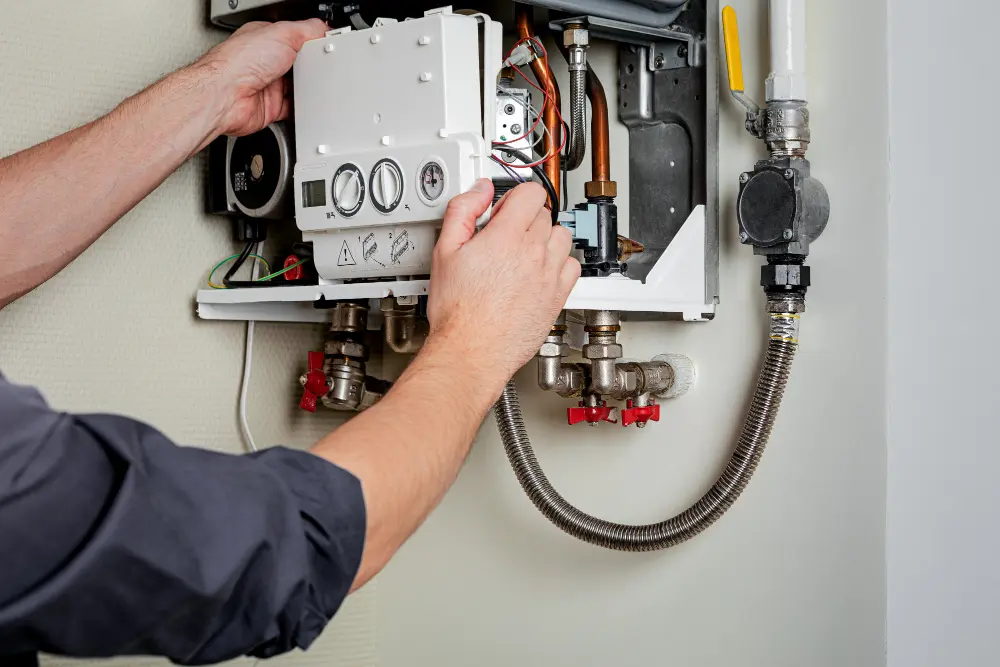
At a glance
If you are considering a new combi boiler newport, the important question is not simply which model is most powerful or which one has the lowest price. The better question is whether the proposed boiler matches the home’s heating requirements, hot water demand and existing system.
A trustworthy recommendation should be based on your property rather than a one-size-fits-all approach.
If you are unsure whether a combi boiler is suitable for your home, Valley Gas can discuss your current heating system, household requirements and available options before you commit to an installation.
What makes a combi boiler suitable for a home?
A combi boiler provides central heating and domestic hot water from a single appliance. It does not normally require a separate hot water cylinder, which can make it attractive where space is limited.
However, suitability depends on several factors, including:
- Number of occupants
- Number of bathrooms
- Frequency of simultaneous hot water use
- Incoming mains water flow
- Property size
- Heating requirements
- Existing pipework
- Available installation location
A good recommendation should take these factors into account instead of selecting an appliance purely because it is popular.
How do you know what boiler output your home needs?
Boiler output is usually measured in kilowatts, but choosing the right output is not simply a matter of picking the biggest number available.
For central heating, the required output is influenced by the home’s heat loss. For a combi boiler, hot water performance also matters because the appliance needs to heat water as it passes through the system.
This creates an important distinction. A boiler may have plenty of output for heating the property but still need to be assessed carefully for the household’s hot water requirements.
An installer should be able to explain why the proposed output has been selected.
What should an installer consider before recommending a combi?
A proper recommendation can involve several checks.
| Factor | Why it matters |
| Property size | Helps establish heating demand |
| Heat loss | Supports appropriate heating output |
| Number of occupants | Indicates likely hot water demand |
| Bathrooms | Helps assess simultaneous usage |
| Mains water flow | Influences combi hot water performance |
| Existing pipework | May affect system efficiency and installation |
| Boiler location | Determines practical installation requirements |
| Controls | Can influence comfort and energy management |
No single factor should determine the decision. The overall picture of the property and household is more useful.
Is a combi boiler always suitable for larger homes?
Not necessarily. Property size alone does not determine whether a combi boiler is appropriate.
A larger home with one bathroom and moderate hot water demand may have different requirements from a smaller property with several bathrooms and multiple people using hot water at the same time.
If several showers, taps or appliances are likely to demand hot water simultaneously, the limitations of instantaneous hot water production should be discussed before choosing a combi.
An installer should explain the likely performance rather than simply recommending a higher output boiler without considering the wider system.
Does mains water pressure affect a combi boiler?
Yes. A combi boiler’s hot water performance depends partly on the incoming mains water supply.
Even a high-output boiler cannot produce unlimited hot water if the incoming water supply cannot deliver sufficient flow. This is why a responsible installer may ask about the property’s water supply and, where appropriate, assess flow rate and pressure.
This can be particularly important in homes where several people use hot water at similar times.
If the existing supply is limited, simply choosing a more powerful boiler may not solve the underlying issue.
Which fuel powers your boiler?

Mains Gas

LPG

Other
It just takes 60 Sec
And then you can book a free consultation
What should you ask before accepting a combi boiler recommendation?
A good installer should be comfortable answering practical questions about the proposed system.
Before booking, ask:
- Why is a combi boiler suitable for this property?
- What output has been recommended?
- How was that output determined?
- How will the boiler cope with the household’s hot water demand?
- Has the incoming mains water supply been considered?
- Will the existing pipework be suitable?
- Are the current heating controls being retained or upgraded?
- Are there any changes required to the boiler location?
- What is included in the installation quotation?
- What happens if additional work is identified?
The quality of the answers can be just as useful as the recommendation itself. A clear explanation gives you confidence that the installer has considered your circumstances.
If you have been given a combi boiler recommendation but are not sure how it was reached, contact Valley Gas. Our team can help you understand the practical considerations before you make a decision.
What happens during a combi boiler installation?
A combi boiler installation newport can vary considerably depending on whether it is a straightforward replacement or involves changes to the heating system.
A typical replacement may involve:
- Isolating and removing the existing boiler.
- Preparing the installation area.
- Connecting the new appliance to the relevant services.
- Installing or adapting the flue where required.
- Connecting condensate and heating pipework.
- Installing specified controls and system components.
- Testing the system.
- Commissioning the boiler according to the manufacturer’s requirements.
- Explaining operation and providing relevant documentation.
If the boiler is being moved to a different location, additional work may be needed. This can include changes to pipework, flue arrangements and condensate drainage.
The quotation should make these requirements clear wherever they can reasonably be established in advance.
Can the existing radiators be kept?
Often, existing radiators can remain in place when a boiler is replaced. However, their condition and performance should still be considered.
If rooms have historically struggled to reach the desired temperature, installing a new boiler alone may not address the underlying issue.
An installer may recommend checking whether radiators are correctly sized for the rooms and whether the system is balanced and operating properly.
This does not mean every boiler replacement requires new radiators. It simply means the heating system should be viewed as a complete setup rather than treating the boiler as an isolated appliance.
A typical Newport home example
Consider a three-bedroom property in Newport where an older boiler is approaching the end of its useful life. The household consists of two adults and one child, with one main bathroom and occasional use of a second shower room.
The homeowner receives a recommendation for a combi boiler. Rather than focusing only on the appliance’s maximum output, the installer considers the property’s heating demand, household hot water usage and incoming water supply.
The recommendation is then explained in practical terms, including expected hot water performance and any changes needed during installation.
This approach gives the homeowner useful context. They can decide based on how the system is expected to work in their home, rather than choosing from a list of specifications without understanding them.
Is a more powerful combi boiler automatically better?
No. Bigger is not automatically better.
An oversized boiler may have a higher maximum output than the property needs for heating, while its hot water performance may still be constrained by the incoming water supply.
Modern boilers can modulate their output, so selecting an appropriate model and specification is more useful than simply choosing the largest available appliance.
The recommendation should balance heating demand, hot water requirements, property characteristics and practical installation considerations.
Final thoughts: the right recommendation should make sense
Choosing a new combi boiler in Newport should involve more than comparing appliance prices. The recommendation should reflect your property’s heating demand, hot water requirements, water supply, existing system and practical installation conditions.
A trustworthy installer will explain these factors clearly and help you understand why a particular boiler has been proposed.
Valley Gas takes a practical approach to boiler replacement, helping homeowners understand their options before work begins. If you are considering a new combi boiler, contact our team for tailored advice and a bespoke quotation.
Related articles
Which fuel powers your boiler?
Mains Gas
LPG
Other
Which fuel powers your boiler?
Mains Gas
LPG
Other


