
Boiler Repair Newport: When Cold Radiators Are Not Just a Bleeding Issue
Find out why cold radiators may need more than a simple bleed and when professional boiler repairs can help restore reliable heating.

Why you can trust our content
We understand that the boiler industry can be confusing, with plenty of outdated or misleading information. That’s why we rely only on trusted, proven sources to guide our advice and installations:
At a glance
Why are some radiators cold when the heating is on?
A cold radiator can seem like a minor heating problem. You might hear the familiar advice to bleed it and expect everything to return to normal.
Sometimes that works. But if a radiator remains cold, only heats at the top or bottom, or repeatedly develops the same problem, there may be another issue affecting the heating system.
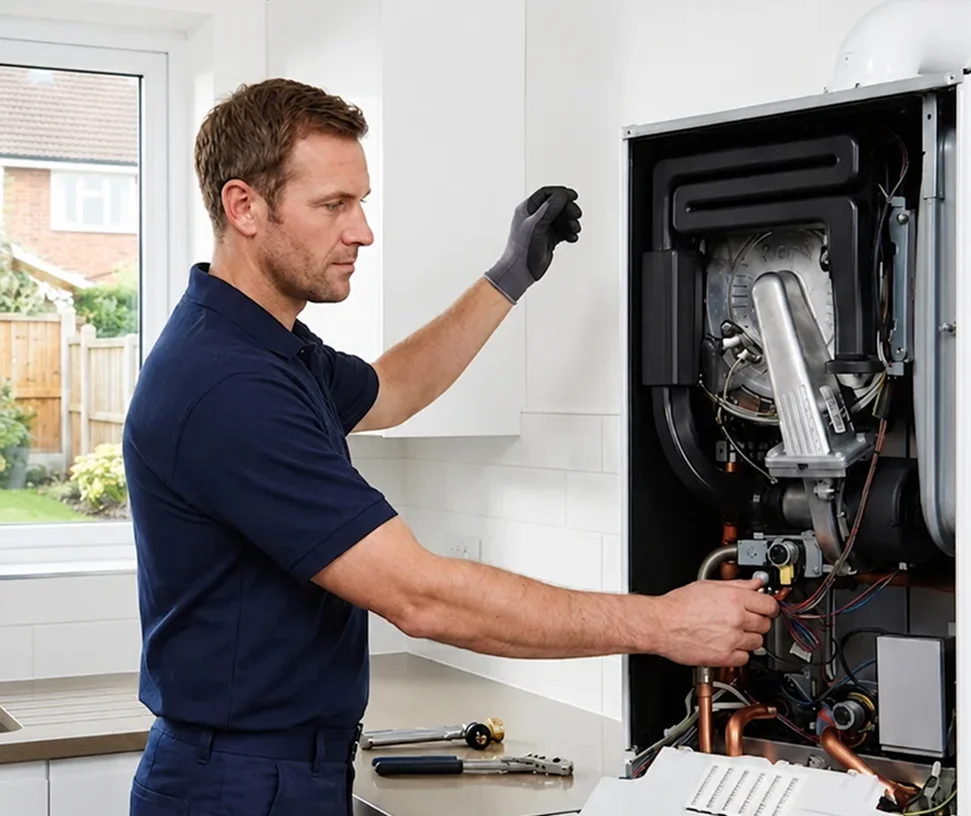
The cause could range from trapped air to poor balancing, sludge, circulation problems, a thermostat issue or a fault affecting the boiler itself. Understanding the symptoms can help you decide whether a simple check is appropriate or whether professional boiler repair is needed.
If your heating is behaving differently from normal, Valley Gas can assess the problem and help identify whether the boiler or another part of the system needs attention.
Is bleeding a radiator always the answer?
No.
Bleeding a radiator removes trapped air from inside it. Air can prevent the radiator from filling correctly with hot water, causing parts of it to remain cold.
However, the pattern of coldness can provide clues.
For example:
- Cold at the top may indicate trapped air
- Cold at the bottom may indicate sludge or restricted circulation
- One cold radiator may point to a local issue
- Several cold radiators may indicate a wider system problem
- Radiators that heat slowly may have circulation or balancing issues
If bleeding does not resolve the problem, repeatedly bleeding the same radiator is unlikely to address the underlying cause.
What other problems can cause cold radiators?
Several heating system faults can affect radiator performance.
Common possibilities include:
- Trapped air
- Sludge or debris
- Poor system balancing
- A faulty thermostatic radiator valve
- Circulation problems
- Low system pressure
- Thermostat issues
- Boiler faults
- Restricted pipework
This is why boiler repair Newport should not automatically be assumed to mean replacing or repairing the boiler itself.
A radiator may be cold because of a component located elsewhere in the heating system.
What does the pattern of coldness tell you?
The location of the cold area can sometimes provide useful information.
| Symptom | Possible cause |
| Cold at the top | Trapped air |
| Cold at the bottom | Sludge or restricted circulation |
| One radiator completely cold | Valve or local circulation issue |
| Several radiators cold | System-wide circulation or boiler issue |
| Boiler runs but radiators stay cool | Heating control or circulation problem |
| Radiators heat unevenly | Balancing issue |
| Heating repeatedly cuts out | Boiler or control fault |
These are only general indicators, not a diagnosis. Different faults can produce similar symptoms.
If the problem is persistent or accompanied by unusual boiler behaviour, professional assessment is sensible.
Could low boiler pressure cause heating problems?
It can.
Many sealed central heating systems operate within a specified pressure range. If pressure falls too low, the boiler may stop operating correctly or display a fault.
Pressure can fall for several reasons, including water loss from the system or a component problem.
If you repeatedly need to restore pressure, that should not simply be treated as routine maintenance. The reason for the pressure loss should be investigated.
When does a cold radiator indicate a boiler fault?
A cold radiator is more likely to be connected to a boiler problem when other symptoms appear at the same time.
These can include:
- The boiler repeatedly shutting down
- Fault codes appearing
- Hot water becoming unreliable
- Unusual noises
- Pressure dropping repeatedly
- The heating failing across several rooms
- The boiler failing to respond to heating controls
If the boiler is not producing or circulating heat correctly, multiple radiators may be affected.
However, if one radiator is cold while the rest of the property heats normally, the problem may be local to that radiator or its valve.
Valley Gas can investigate heating faults and help determine whether the issue relates to the boiler, controls or the wider central heating system. Contact the team if a problem keeps returning after basic checks.
Can balancing solve uneven radiator temperatures?
It can.
A central heating system needs to distribute hot water between radiators. If the system is not balanced properly, some radiators can receive more flow than others.
The result may be a warm downstairs area and cooler upstairs rooms, or radiators close to the boiler becoming hot much faster than those further away.
Balancing adjusts the flow so that heat can be distributed more evenly.
It is particularly worth considering when:
- One part of the house is consistently warmer
- Radiators heat at very different speeds
- A new radiator has been installed
- The heating system has recently been altered
- Cold spots have appeared without an obvious boiler fault
What if the boiler is old but still working?
Age alone does not automatically mean a boiler needs replacing.
An older appliance that is reliable and properly maintained may continue to provide useful service. However, repeated breakdowns, increasing repair bills, and declining performance can change the calculation.
If a repair is relatively minor, fixing the existing boiler may make sense. If several components are failing or the appliance is becoming difficult to maintain, replacement may be worth discussing.
A professional assessment can help distinguish between a repairable fault and a wider replacement decision.
Which fuel powers your boiler?
Mains Gas
LPG

Other
It just takes 60 Sec
And then you can book a free consultation
A typical Newport heating problem
Imagine a typical two-storey home where the downstairs radiators become hot quickly, but two upstairs radiators remain cool.
The homeowner initially bleeds both radiators, but the problem returns. An assessment finds that there is no major boiler fault. Instead, the heating system is poorly balanced, and one thermostatic radiator valve is not operating correctly.
After the valve is addressed and the system is balanced, heat distribution improves.
In this situation, replacing the boiler would have been unnecessary. The important lesson is that symptoms need to be investigated before expensive work is agreed.
When should you call an engineer?
Some heating problems should not be left to trial and error.
Consider arranging professional help when:
- Several radiators stop heating
- The boiler displays a fault code
- Pressure repeatedly drops
- The heating keeps switching off
- Hot water becomes unreliable
- You hear unusual noises
- A fault keeps returning
- You notice a leak
- You are unsure whether the system is operating safely
Gas appliances and heating systems should be handled by appropriately qualified professionals.
What information should you give the installer?
Before an engineer arrives, it can help to note exactly what is happening.
Record:
- Which radiators are affected
- Whether they are completely cold or partly warm
- Whether the problem is constant or intermittent
- Whether hot water is affected
- Any boiler fault codes
- Whether the pressure changes
- Any unusual sounds
- When the issue first appeared
These details can help the engineer understand the pattern and investigate more efficiently.
Do not assume a cold radiator is just an air problem
Bleeding a radiator can solve a straightforward trapped-air issue, but persistent cold spots deserve closer attention.
Problems with balancing, valves, sludge, circulation, pressure and controls can all affect heating performance. In some cases, the boiler itself may need professional attention.
If you are experiencing repeated heating problems, boiler repair in Newport should begin with identifying the actual cause rather than replacing components unnecessarily.
Valley Gas can help diagnose heating problems and advise on suitable repair options. If your radiators are repeatedly cold or your boiler is showing signs of trouble, contact the team for professional guidance.
Related articles
Which fuel powers your boiler?
Mains Gas
LPG
Other
Which fuel powers your boiler?
Mains Gas
LPG
Other


