
Boiler Repair Newport: Why Diagnosis Quality Affects Your Next Step
Understand why accurate boiler diagnosis in Newport can help identify the right repair, avoid unnecessary work and guide your next step.

Why you can trust our content
We understand that the boiler industry can be confusing, with plenty of outdated or misleading information. That’s why we rely only on trusted, proven sources to guide our advice and installations:
At a glance
A boiler that stops working can create an immediate problem, particularly during colder weather. But before deciding whether to repair, replace or temporarily manage the issue, it is important to understand what has actually gone wrong.
For homeowners arranging boiler repair Newport, the quality of the diagnosis can have a major influence on the next step. A fault code may identify an area of concern, but it does not always explain the underlying cause. Several different problems can produce similar symptoms.
A proper diagnosis helps avoid replacing parts unnecessarily and gives the homeowner a clearer basis for deciding what to do next.
If your boiler has developed a fault, Valley Gas can assess the problem and explain the available options. Contact our team if you need professional guidance before deciding on a repair or replacement.
Why is accurate boiler diagnosis so important?
A boiler is made up of multiple components that work together. A problem with one part can sometimes affect another, making the original cause difficult to identify without appropriate checks.
For example, a boiler that repeatedly loses pressure may have a problem with the heating system, an expansion vessel or another component. Simply topping up the pressure may restore operation temporarily without addressing the underlying issue.
Good diagnosis aims to identify why the fault is occurring rather than only dealing with the most obvious symptom.
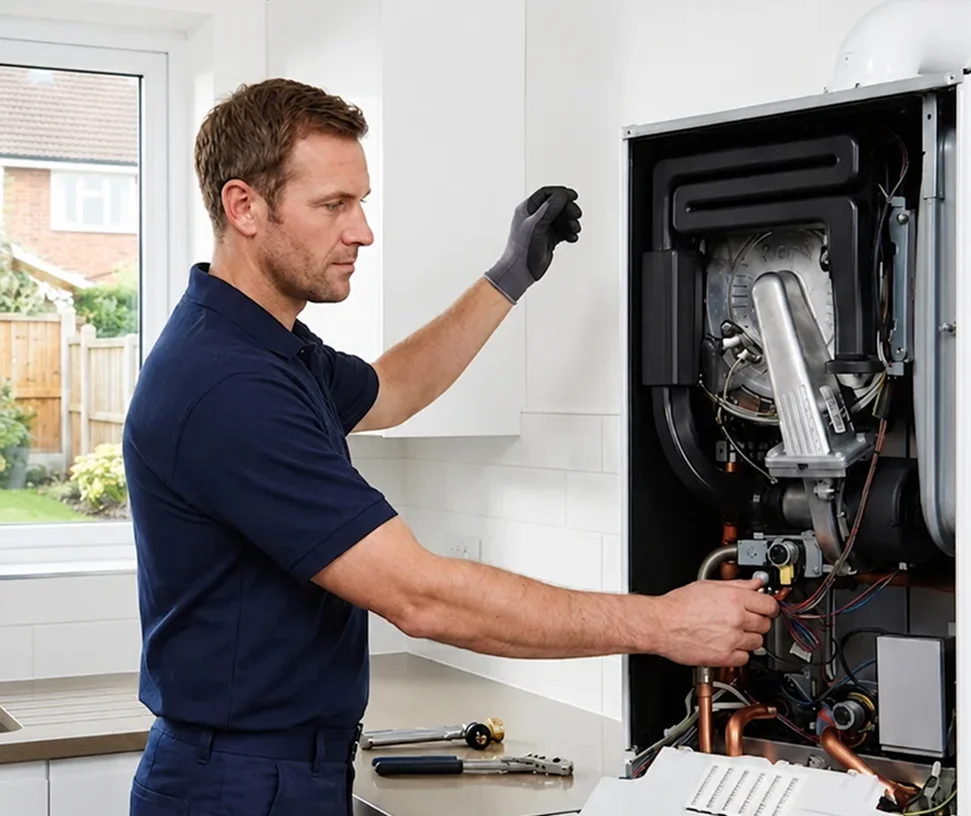
What should an engineer check when diagnosing a boiler fault?
The exact checks depend on the symptoms and appliance, but a competent engineer may consider:
- Boiler fault codes and controls
- System pressure
- Heating and hot water operation
- Visible leaks
- Pipework and connections
- Electrical supply and controls
- Flue arrangements
- Relevant boiler components
- Previous repair history
- Signs of repeated or related faults
The engineer should explain what has been identified and what further investigation, if any, is required.
A homeowner should not be expected to understand every technical detail. What matters is that the explanation is clear enough to understand the proposed next step.
Does a fault code tell you exactly what needs replacing?
Not always.
A fault code can be useful because it points an engineer towards a particular area of the boiler. However, it does not necessarily mean that the named component is automatically the cause.
Additional testing may be required to determine what has triggered the fault.
This is one reason why replacing a component based purely on a displayed code can be risky. If the underlying problem remains, the boiler may continue to develop the same fault.
What should a boiler diagnosis establish?
| Question | Why it matters |
| What is the reported symptom? | Establishes the starting point |
| Is there a fault code? | Helps identify a possible fault area |
| Is the issue intermittent? | Can affect diagnosis |
| Is pressure stable? | May indicate wider system problems |
| Is heating affected? | Helps narrow the fault |
| Is hot water affected? | Provides further diagnostic information |
| Has the boiler been repaired before? | Previous faults can provide useful context |
| Is replacement worth considering? | Helps inform the longer-term decision |
A professional diagnosis should connect the evidence to the recommendation.
When is a repair likely to make sense?
There is no universal age at which a boiler should automatically be replaced. A repair may be sensible when the appliance is otherwise in reasonable condition, and the fault can be addressed without disproportionate expense.
Factors to consider include:
- Age of the boiler
- Previous repair history
- Frequency of breakdowns
- Availability of replacement components
- Likely repair cost
- General condition
- Efficiency compared with a modern appliance
- Whether the boiler still meets household requirements
A relatively minor fault on an otherwise reliable boiler may be worth repairing.
Repeated failures on an ageing appliance may make replacement worth discussing.
The decision should be based on the circumstances rather than a blanket rule.
Which fuel powers your boiler?

Mains Gas

LPG

Other
It just takes 60 Sec
And then you can book a free consultation
When should replacement be considered instead?
Replacement can become a reasonable option when repair costs are mounting or the appliance is no longer reliable.
Signs that replacement may be worth discussing include:
- Frequent breakdowns
- Multiple repairs within a short period
- Increasing repair costs
- Difficulty sourcing components
- Poor performance
- A boiler that no longer meets the home’s needs
- Significant deterioration of the wider system
However, the decision should not be made simply because a boiler has reached a particular age.
An engineer should explain the condition of the appliance and give the homeowner enough information to make an informed choice.
If your boiler has developed repeated faults and you are unsure whether another repair is sensible, speak to Valley Gas. Our team can help you understand whether repair or replacement should be considered.
Why does repair history matter?
Previous repairs can provide useful clues when diagnosing a recurring problem.
For example, if the same fault has appeared several times, the engineer should consider whether the earlier repair addressed the root cause or only restored operation temporarily.
Keeping records of previous work can therefore be helpful.
If possible, tell the engineer:
- What the previous fault was
- When it happened
- Which component was repaired
- Whether the boiler has behaved differently since
- How often the problem has returned
This information can save time during diagnosis and provide useful context.
What should a repair quotation explain?
Once the fault has been identified, the homeowner should receive a clear explanation of the proposed repair and associated cost.
Where appropriate, this should include:
- The diagnosed fault
- Recommended repair
- Parts required
- Labour
- Any additional work
- Whether the repair is expected to resolve the problem
- Relevant warranty or guarantee information
If the engineer cannot confirm the exact cause without further investigation, that should also be explained.
A transparent approach is preferable to presenting an uncertain repair as a guaranteed solution.
A typical Newport boiler repair example
Consider a homeowner in Newport whose boiler repeatedly shuts down. The display shows a fault code, and the homeowner assumes the indicated component needs replacing.
An engineer investigates the boiler and wider system rather than immediately replacing the part. After carrying out the relevant checks, the engineer identifies an underlying issue affecting the boiler’s operation.
The homeowner is then given a clear explanation of the repair and what it is expected to achieve.
The important part of this example is not the particular fault. It is the diagnostic approach. Identifying the cause can prevent unnecessary parts replacement and help the homeowner make a better decision.
Can homeowners diagnose boiler faults themselves?
Homeowners can safely observe basic symptoms, such as whether the boiler is displaying an error code, whether heating is working and whether the system pressure appears unusually low or high.
However, gas appliances should not be opened or repaired by unqualified individuals.
Useful information to record includes:
- Fault codes
- When the problem occurs
- Whether heating works
- Whether hot water works
- Unusual noises
- Changes in pressure
- Whether the issue is intermittent
This information can help an appropriately qualified engineer investigate the fault.
The diagnosis comes before the decision
Good boiler repair starts with understanding the problem. A fault code or obvious symptom can provide a useful starting point, but it may not tell the complete story.
For boiler repair in Newport, homeowners should look for a clear diagnosis, an explanation of the proposed repair and honest guidance about whether continued repairs remain sensible.
Valley Gas takes a practical approach to boiler problems, helping homeowners understand the issue before deciding on the next step. If your boiler is not working as it should, contact our team for professional advice.
Related articles
Which fuel powers your boiler?
Mains Gas
LPG
Other
Which fuel powers your boiler?
Mains Gas
LPG
Other


