
Boiler Repair Cost: Paying Repeatedly for the Same Comfort Problem
Understand boiler repair costs, common issues, and when a lasting repair or replacement could be the better option for your home.

Why you can trust our content
We understand that the boiler industry can be confusing, with plenty of outdated or misleading information. That’s why we rely only on trusted, proven sources to guide our advice and installations:
At a glance
When does repeated boiler repair become a bigger problem?
A boiler repair can be frustrating, particularly when the heating is needed, and the same fault appears again only a few months later.
One repair does not necessarily mean that a boiler should be replaced. Many faults are relatively straightforward to resolve, allowing a well-maintained appliance to continue operating reliably. The concern comes when repairs become frequent, expensive or connected to declining heating performance.
If rooms are still taking too long to warm up or radiators remain inconsistent after repeated work, it is worth stepping back and considering the complete picture.
The real boiler repair cost is not simply the amount shown on one invoice. It is the pattern of spending, reliability and comfort over time.
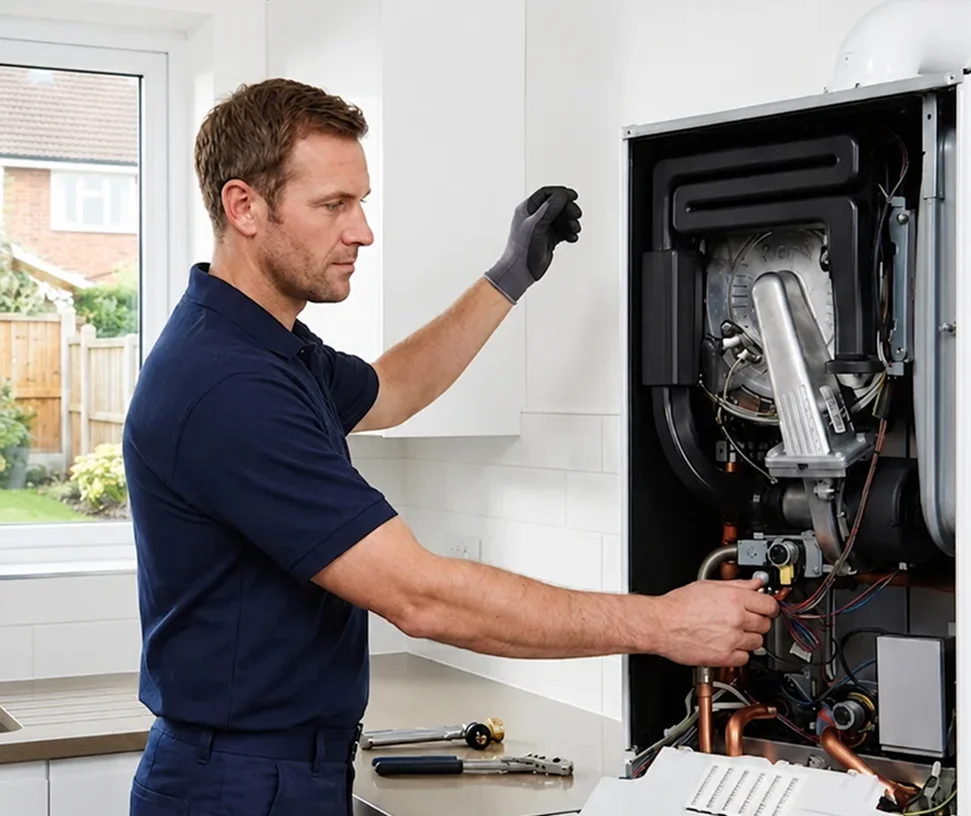
If your boiler has needed several repairs recently, Valley Gas can assess the symptoms and help you understand whether further repair is sensible or whether replacement should be considered.
Why can repeated repairs become expensive?
Boilers contain multiple components that work together. As an appliance gets older, individual parts can begin to wear or fail.
A single replacement component may not be particularly expensive. However, repeated call-outs and repairs can gradually add up.
Common reasons for recurring heating problems include:
- Ageing components
- Poor system condition
- Low or unstable pressure
- Circulation problems
- Electrical or control faults
- Blocked or restricted components
- Faults caused by wider heating system issues
- General wear and tear
The important question is not simply whether another repair is possible. It is whether repairing the existing appliance remains a sensible use of money.
How should you judge the cost of repeated repairs?
Start by looking at the history rather than the latest fault.
| Question | Why it matters |
| How old is the boiler? | Older appliances may have more components approaching the end of their service life |
| How many repairs have been needed? | Frequent faults can indicate declining reliability |
| What have repairs cost recently? | Helps reveal the overall financial pattern |
| Is heating performance declining? | Poor comfort may indicate wider issues |
| Is hot water reliable? | Changes can indicate boiler deterioration |
| Are parts readily available? | Availability can affect future repairs |
| Has the same fault returned? | Recurring faults may require deeper investigation |
Keeping records of previous repairs can make the decision easier.
A boiler that has required one modest repair over several years is very different from an appliance that has needed multiple expensive interventions within a short period.
Could repeated repairs be hiding a wider heating problem?
Yes.
Not every heating problem originates inside the boiler.
For example, cold radiators may be caused by trapped air, poor balancing, sludge, faulty valves or restricted circulation. A boiler may continue working correctly while another part of the heating system causes poor comfort.
Similarly, a boiler that repeatedly loses pressure may have an underlying issue elsewhere in the system.
This is why simply replacing the same component every time a symptom appears may not provide a lasting solution.
Is an expensive repair always a reason to replace the boiler?
No.
The age and condition of the appliance matter, but so does the nature of the repair.
A relatively young boiler with one significant component failure may still be worth repairing. Conversely, an older appliance with several recurring faults may no longer represent good value.
When considering boiler repair cost, ask whether the repair is likely to restore reliable operation or whether another fault could reasonably appear soon afterwards.
An installer or heating engineer can help assess the wider condition of the appliance before you make a decision.
Which fuel powers your boiler?

Mains Gas
LPG

Other
It just takes 60 Sec
And then you can book a free consultation
What is considered an emergency boiler repair?
An emergency situation is generally one where a heating fault requires prompt attention because of safety concerns, loss of essential heating or other significant problems.
Examples can include:
- Suspected gas-related safety issues
- Significant water leaks
- Complete loss of heating during severe weather
- Serious boiler faults
- Repeated shutdowns accompanied by other concerning symptoms
The exact emergency boiler repair cost will depend on the fault, timing, required parts and work involved.
Emergency call-outs can also carry different charges from planned appointments, so it is sensible to ask about pricing and availability where circumstances allow.
If you suspect a gas leak or carbon monoxide issue, do not attempt to diagnose or repair the appliance yourself. Follow appropriate gas safety guidance and use a suitably qualified professional.
Why can emergency repairs cost more?
Urgent work can involve additional costs because engineers may need to attend outside normal working hours or respond at short notice.
The repair may also require a specific part that is not immediately available, meaning further work could be needed.
Before authorising an emergency repair, ask:
- What is the call-out charge?
- Is labour included?
- Are parts charged separately?
- Is there an out-of-hours premium?
- Can the engineer provide an estimated total?
- What happens if the fault cannot be repaired during the first visit?
You may not always be able to obtain an exact figure before diagnosis, but a clear explanation of the charging structure is useful.
Valley Gas can help investigate boiler faults and heating problems so you can understand what is causing the issue rather than repeatedly treating the symptoms.
When does repair stop making financial sense?
There is no fixed repair limit that applies to every boiler.
Instead, consider the relationship between the cost of the repair and the likely future reliability of the appliance.
Replacement may be worth discussing when:
- Repairs are becoming frequent
- The same fault keeps returning
- Several components are deteriorating
- The boiler is increasingly unreliable
- Heating performance is declining
- Repair costs are becoming substantial
- Suitable replacement parts are becoming difficult to obtain
- The boiler is no longer appropriate for the property
The decision should be based on the complete circumstances rather than a single number.
A typical Newport homeowner scenario
Imagine a homeowner with an older boiler that has been repaired several times over the past two years.
The latest problem causes the heating to stop working. The repair itself is possible, but the homeowner looks back at previous invoices and realises that a significant amount has already been spent.
An assessment also identifies ageing components and inconsistent radiator performance.
Rather than treating the latest repair in isolation, the homeowner compares the likely future repair requirements with the cost of replacing the boiler and addressing the wider heating system.
This does not automatically mean replacement is the right choice. It simply gives the homeowner enough information to make a decision based on the longer-term picture.
Could a repair improve comfort without replacing the boiler?
Yes, if the underlying fault is responsible for the poor heating performance.
A boiler that is failing to operate correctly may struggle to provide consistent heating or hot water. Repairing the relevant fault can restore normal operation.
However, if the boiler is working correctly but the home still has cold rooms, the cause may lie elsewhere.
Radiator size, system balancing, insulation, controls and heat distribution should all be considered.
This distinction is important because replacing or repairing the boiler will not necessarily resolve a problem caused by another component.
What should you ask before paying for another repair?
Before agreeing to another significant repair, ask the engineer:
- What has caused the fault?
- Is this a recurring problem?
- Is the boiler otherwise in good condition?
- How much is the repair expected to cost?
- Are parts readily available?
- Could another component fail soon?
- Would replacement be worth considering?
- Is there a wider heating system problem?
- Will the repair restore normal heating performance?
These questions can help prevent decisions from being based solely on the immediate need to get the heating working again.
When should you stop chasing the same heating fault?
Repeated repairs can become frustrating when the same comfort problem keeps returning. The sensible approach is not necessarily to replace the boiler at the first sign of trouble, but to understand the pattern.
Look at the appliance’s age, repair history, reliability, heating performance and likely future costs. Also check whether the actual problem is coming from the boiler or another part of the central heating system.
The boiler repair cost should therefore be viewed in the context of the complete heating picture.
If your boiler has needed repeated repairs or your home is still struggling to heat properly, Valley Gas can provide practical guidance on the available options. Contact the team to discuss your heating problem and arrange appropriate advice.
Related articles
Which fuel powers your boiler?
Mains Gas
LPG
Other
Which fuel powers your boiler?
Mains Gas
LPG
Other


