
Boiler Installation Newport: Which Boiler Setup Is Right for Your Home?
Discover which boiler type best suits your Newport home, considering heating needs, hot water demand, available space and your existing system.

Why you can trust our content
We understand that the boiler industry can be confusing, with plenty of outdated or misleading information. That’s why we rely only on trusted, proven sources to guide our advice and installations:
At a glance
Choosing a new boiler is not simply a matter of picking a model from a list. The right setup depends on how your home is laid out, how much hot water your household uses and how your existing heating system is configured.
For homeowners considering boiler installation in Newport, understanding the different options can make it easier to have a useful conversation with an installer. A boiler that works well in one property may be unsuitable for another, even if the homes are similar in size.
This guide explains the main boiler setups available, what an installer should assess before recommending one and the questions worth asking before work begins.
If you are unsure which system would suit your property, contact the Valley Gas team for tailored advice based on your home’s heating and hot water requirements.
What are the main boiler setups for a home?
Most domestic central heating systems fall into three broad categories: combi boilers, system boilers and regular boilers. Each has a different arrangement for producing and storing hot water.
| Boiler type | How hot water is supplied | Often suitable for |
| Combi boiler | Heats water directly from the mains | Smaller homes and households with moderate hot water demand |
| System boiler | Works with a separate hot water cylinder | Homes with higher simultaneous hot water demand |
| Regular boiler | Works with a cylinder and usually a cold water storage tank | Properties with an existing traditional heating system |
| Electric boiler | Uses electricity rather than gas | Homes where gas is unavailable or an alternative system is appropriate |
These are general guidelines rather than fixed rules. A property with four bedrooms, for example, does not automatically need a system boiler. The number of occupants and their daily routines can be just as important.
Is a combi boiler suitable for your household?
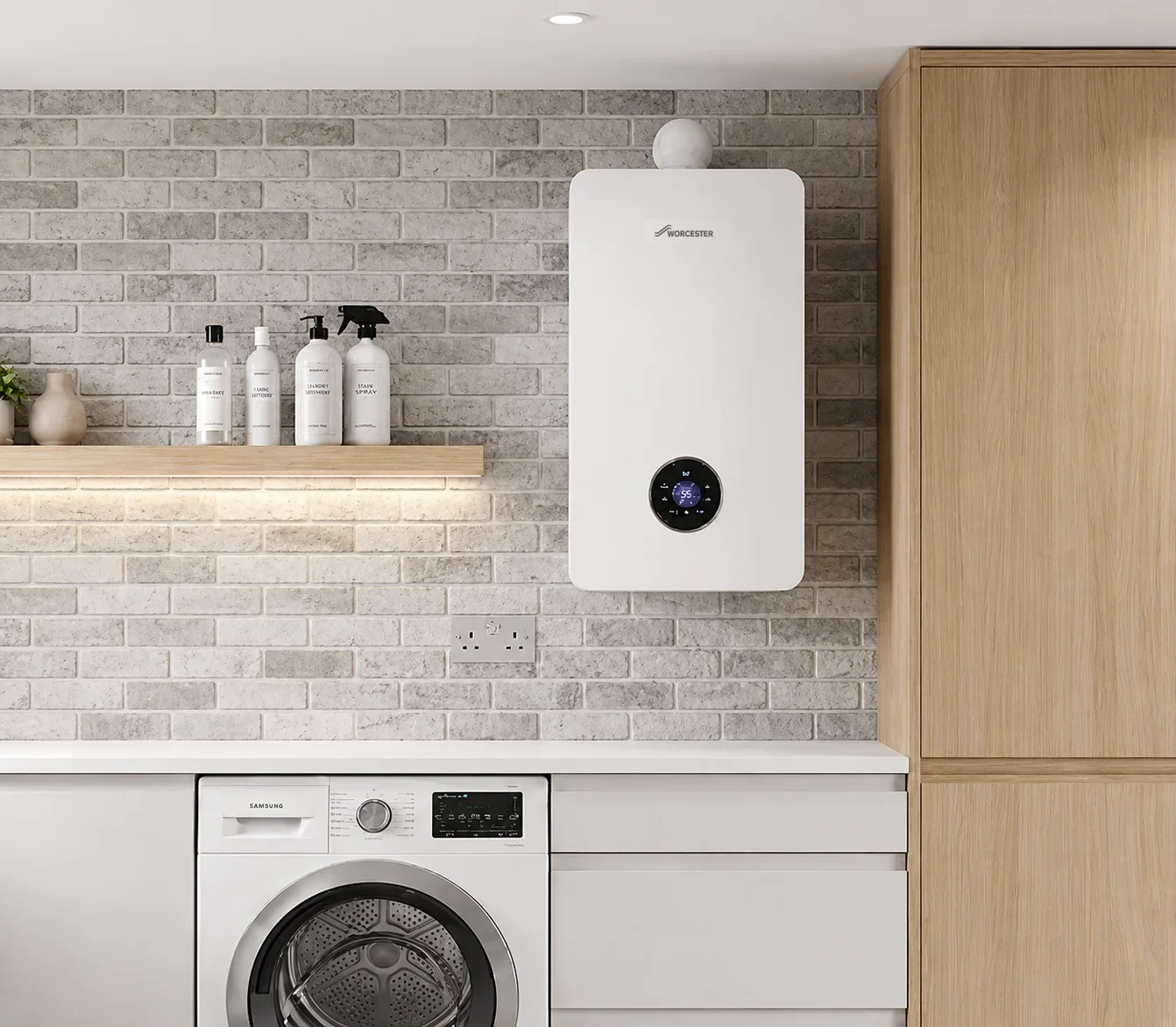
A combi boiler heats water directly from the mains, so it does not normally require a separate hot water cylinder or cold water storage tank. This can make it an attractive option where space is limited.
A combi may work particularly well where:
- One bathroom is used regularly.
- Hot water demand is spread throughout the day.
- There is limited cupboard or airing cupboard space.
- The mains water supply has adequate flow and pressure.
- The household wants hot water without waiting for a cylinder to heat.
There are limitations to consider. A combi supplies hot water as it is needed, so its performance is influenced by the incoming mains water supply. If several outlets are likely to demand hot water simultaneously, the system may not provide the experience the household expects.
This is one reason why a good boiler fitter Newport should assess more than the number of bedrooms before recommending a replacement.
When could a system boiler make more sense?
A system boiler uses a separate hot water cylinder. Unlike a traditional regular boiler arrangement, many of the system’s components are built into the boiler itself, which can simplify installation.
This setup can be useful for households where several people may need hot water around the same time. For example, a larger household with multiple bathrooms may find stored hot water more convenient than relying entirely on instantaneous hot water from a combi.
The cylinder also means there is a finite amount of stored hot water. Once that supply has been used, the cylinder needs time to recover.
When comparing options, consider:
- How many people live in the property.
- How many bathrooms are regularly used.
- Whether showers and baths are commonly used at the same time.
- Available space for a hot water cylinder.
- Existing pipework and heating controls.
- Your preferred pattern of hot water use.
Valley Gas can assess the existing heating arrangement and explain which type of system could suit your property’s actual requirements rather than relying on property size alone.
Should you keep a regular boiler system?
Regular boilers, sometimes called conventional or heat-only boilers, are commonly found in older homes. They typically work alongside a hot water cylinder and a cold water storage tank.
Replacing an existing regular boiler with another regular boiler can sometimes be a practical approach, particularly where the property already has suitable pipework, storage and a cylinder arrangement.
However, replacement does not always have to mean like-for-like installation. Changes to the household, such as a loft conversion, additional bathroom or alterations to water usage, may mean that another configuration deserves consideration.
A qualified installer should therefore look at the whole heating system rather than treating the boiler itself as an isolated appliance.
What should an installer check before recommending a boiler?
A proper assessment helps prevent a boiler from being selected simply because it has a particular output or is popular with other homeowners.
A boiler fitter in Newport should consider factors such as:
1. Property size and heat demand
The boiler needs to provide enough heat for the property’s rooms without being unnecessarily oversized. Heat loss calculations can help establish the heating requirement more accurately than using bedroom numbers alone.
2. Hot water requirements
Heating demand and hot water demand are separate considerations. A household may have relatively modest space-heating requirements but still need substantial hot water capacity.
3. Mains water performance
For a combi boiler, incoming water flow and pressure can influence the hot water experience. This should be checked before installation rather than assumed to be adequate.
4. Existing system design
The current boiler, cylinder, radiators, controls and pipework can all affect the practical options available. An installer may identify additional work that is necessary for a safe and suitable replacement.
5. Boiler location
The available installation space matters. The position of the boiler needs to comply with relevant requirements while also allowing suitable access for servicing and maintenance.
6. Future household needs
Think beyond today’s requirements. If the property is likely to be extended or household occupancy is expected to change, this may affect the most appropriate heating configuration.
Does a higher boiler output always mean a better choice?
Not necessarily. Boiler output needs to match the requirements of the property and system.
A boiler that is significantly oversized for the heating demand may not operate as efficiently as a correctly selected appliance. On the other hand, choosing an appliance with insufficient capacity can affect comfort and hot water performance.
For combi boilers, output is particularly relevant to hot water performance because the boiler needs to heat mains water as it passes through the appliance.
This is why comparing boilers purely by their stated output can give an incomplete picture. The system design, controls, property characteristics and household usage all matter.
What does a typical boiler installation involve?
The exact process depends on whether the new boiler is replacing a similar system or whether the heating configuration is changing.
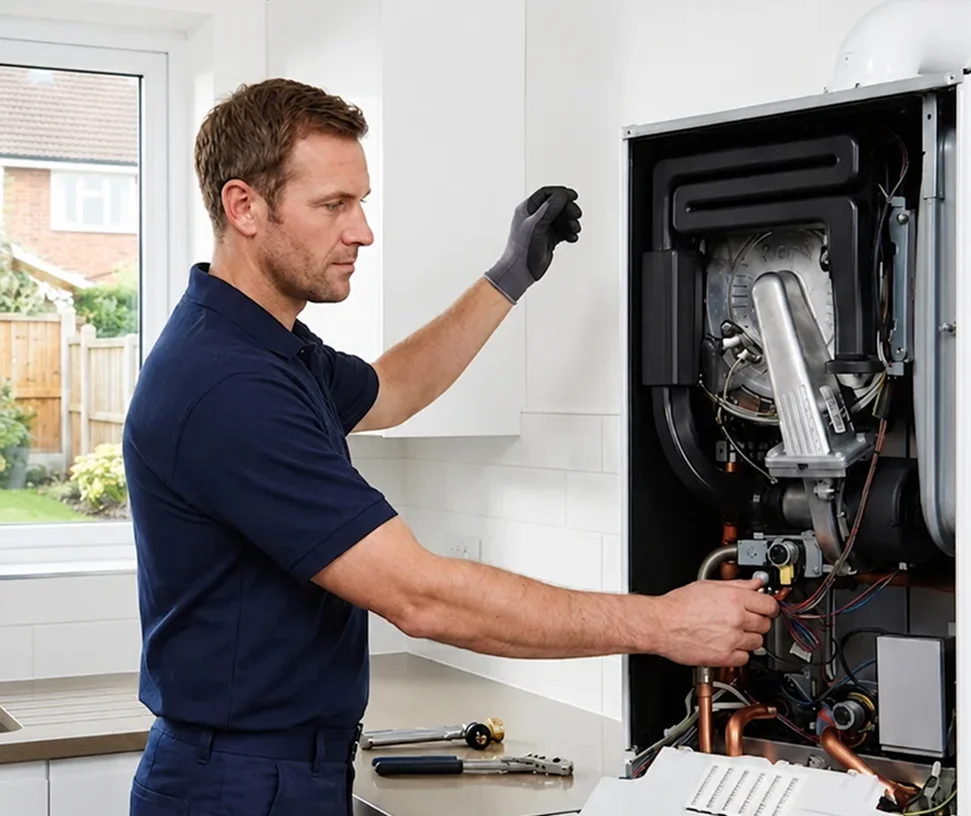
A typical installation may involve:
- Assessing the existing boiler and heating system.
- Confirming the appropriate boiler type and output.
- Checking the proposed boiler position.
- Reviewing pipework and system components.
- Removing the existing appliance where required.
- Installing the new boiler and associated components.
- Connecting controls and heating circuits.
- Testing the system and checking operation.
- Completing the necessary commissioning and documentation.
A straightforward replacement may be relatively simple, while changing from one type of system to another can involve additional pipework, cylinders, controls or other components.
The installation quote should therefore make clear what is included rather than presenting only the boiler price.
Which fuel powers your boiler?

Mains Gas

LPG

Other
It just takes 60 Sec
And then you can book a free consultation
A typical Newport home scenario
Imagine a three-bedroom property occupied by two adults and two children. The household has one main bathroom, limited storage space and a relatively predictable pattern of hot water use.
A combi boiler could potentially suit this household, provided the incoming mains water supply and other installation conditions are appropriate.
Now consider a larger property where several occupants regularly use different bathrooms at similar times. A system boiler with a suitable hot water cylinder could provide a different solution, particularly if there is adequate space for the cylinder.
The important point is that both homes could have similar heating requirements while needing different approaches to hot water.
What should you ask before agreeing to a boiler installation?
Before approving the work, ask the installer to explain the reasoning behind the recommendation.
Useful questions include:
- Why is this boiler type suitable for my property?
- How has the required boiler output been determined?
- Has the mains water flow and pressure been checked?
- What happens to my existing cylinder or tanks?
- Will the heating controls be replaced or upgraded?
- Is any additional pipework required?
- What is included in the installation price?
- What commissioning and documentation will I receive?
- What servicing will the new boiler require?
Clear answers can help you understand not only what you are buying, but why the proposed system has been selected.
How can the right boiler setup improve your everyday heating?
The right system should provide heating and hot water in a way that fits your household’s routine.
For one home, that may mean freeing up space by removing an old cylinder. For another, it could mean retaining stored hot water because several people need showers at similar times.
The aim is not simply to install the most powerful or newest appliance. It is to create a heating system that is appropriate for the property, practical to operate and capable of meeting expected demand.
If you are comparing boiler installation Newport options, ask for the recommendation to be explained in terms of your home rather than just the boiler’s headline specifications.
Choosing the Right Boiler for Your Newport Home
Choosing a boiler is really about choosing the right heating setup for the way your home operates. Combi, system and regular boilers each have different characteristics, and the most suitable option depends on heating demand, hot water usage, available space, water supply and the existing system.
A thorough assessment before installation can help avoid an unsuitable boiler choice and unexpected work later. If you are considering a new system, the Valley Gas team can provide practical guidance based on your property and heating requirements.
If you are planning a boiler installation in Newport, speak to Valley Gas for professional advice and a tailored installation quote.
Related articles
Which fuel powers your boiler?
Mains Gas
LPG
Other
Which fuel powers your boiler?
Mains Gas
LPG
Other


