
Boiler Installation Newport: Fixing Cold Rooms Starts With the Right System
Discover how the right boiler installation in Newport can improve heating performance and help keep cold rooms comfortable.

Why you can trust our content
We understand that the boiler industry can be confusing, with plenty of outdated or misleading information. That’s why we rely only on trusted, proven sources to guide our advice and installations:
At a glance
Why do some rooms stay cold when the heating is on?
A home can have a working boiler and still feel uncomfortable. One bedroom may warm quickly, while another remains chilly. You might notice cold spots near windows, slow heat-up times in the morning or radiators that never seem to get properly warm.
These problems are not always caused by a faulty boiler. The system may be incorrectly sized, poorly balanced, lacking suitable controls or working with radiators that are no longer appropriate for the home.
When considering boiler installation in Newport, it is therefore worth looking beyond the boiler itself. The aim should be to create a heating system that distributes heat effectively throughout the property, rather than simply replacing one appliance with another.
If cold rooms have become a regular problem, contact Valley Gas to discuss the symptoms you are experiencing. A proper assessment can help identify whether the boiler, radiators, controls or system design is contributing to the issue.
Is the boiler always responsible for cold rooms?
Not necessarily. A boiler generates heat, but the rest of the heating system determines how effectively that heat reaches different parts of the property.
Common causes of uneven heating include:
- Radiators that are too small for the room
- Incorrect system balancing
- Trapped air within radiators
- Sludge or restricted circulation
- Poorly positioned thermostatic radiator valves
- An older boiler with reduced performance
- Inadequate heating controls
- Changes to the property, such as extensions or converted rooms
- Pipework that no longer suits the current layout
For example, a house may originally have had a relatively simple layout with a small number of rooms. After an extension or loft conversion, the heating demand may have changed considerably. The existing system could then struggle to heat the additional space evenly.
This is why a good assessment should consider the whole system rather than focusing solely on the boiler.
What should be considered before a new boiler is installed?
A suitable replacement starts with understanding the property.
The boiler needs to provide enough heat for the home’s heating and hot water requirements without being unnecessarily oversized. A competent installer should consider factors such as property size, insulation, number of rooms, hot water demand and the existing heating arrangement.
The condition and size of the radiators should also be reviewed. Installing a new boiler while leaving unsuitable radiators in place may not resolve cold rooms.
Other considerations include:
| Heating factor | Why it matters |
| Boiler output | Needs to suit the property’s heating requirements |
| Radiator size | Determines how effectively heat is released into each room |
| System balance | Helps distribute hot water more evenly |
| Heating controls | Allows better control of temperature and heating periods |
| Insulation | Reduces heat loss from walls, roofs and floors |
| Pipework | Affects circulation and overall system performance |
| Hot water demand | Helps determine the most suitable boiler type |
This whole-home approach can make the difference between simply having a new boiler and having a heating system that feels noticeably better.
How can the right boiler improve whole-home comfort?
The right boiler can provide more consistent heating, but its performance depends on how well the complete system is designed and installed.
Modern boilers can adjust their output to match demand, helping the system operate more efficiently instead of constantly switching between full output and no output. When combined with appropriate controls and correctly sized radiators, this can contribute to steadier temperatures.
However, replacing the boiler should not be viewed as a guaranteed cure for every cold room. If heat loss is excessive or circulation is restricted, another issue may need attention first.
A professional boiler fitter newport should therefore look at the property as a complete heating system. This includes checking whether the current arrangement is capable of delivering the comfort expected from a new installation.
Valley Gas can assess the existing setup and explain which improvements may be worthwhile. The goal is to provide practical advice based on the property, rather than recommending equipment without understanding the underlying problem.
What happens during a properly planned boiler installation?
The installation itself is only one part of the process. Before work begins, the installer should establish what the property needs and whether the proposed system is suitable.
Depending on the home, this may involve reviewing:
- The current boiler and heating system
- Existing radiators and their condition
- Heating controls
- Pipework and circulation
- Hot water requirements
- Boiler location and flue arrangements
- Any recent changes to the property
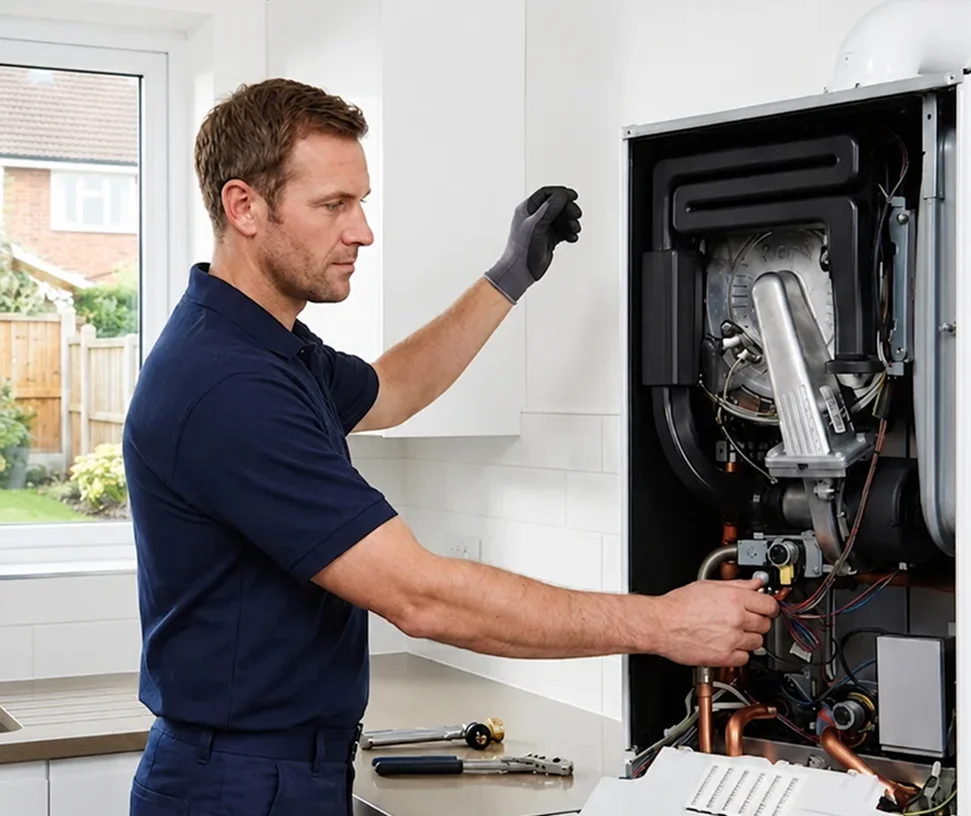
During the installation, attention to detail matters. Correct connections, safe flue arrangements, appropriate condensate drainage and system commissioning all contribute to reliable operation.
Once the boiler is installed, the system should be checked and adjusted so that it operates correctly. Radiators may need balancing to help ensure that rooms receive heat more evenly.
Which fuel powers your boiler?

Mains Gas

LPG

Other
It just takes 60 Sec
And then you can book a free consultation
Could radiator balancing solve a cold room without replacing the boiler?
Sometimes it can.
Radiator balancing involves adjusting the flow through individual radiators so that heat is distributed more evenly around the property. Without proper balancing, radiators closer to the boiler can receive more hot water while those further away may heat more slowly.
This can create a familiar situation where one part of the house becomes too warm while another remains cold.
If the boiler is otherwise suitable and functioning correctly, balancing and servicing may improve comfort without requiring a complete replacement.
On the other hand, if the boiler is old, repeatedly breaking down or unsuitable for the property’s current heating demand, replacement may make more sense.
A qualified boiler fitter newport can help distinguish between a relatively simple system adjustment and a problem that requires more substantial work.
A typical Newport home heating scenario
Consider a typical two-storey property where the downstairs rooms warm reasonably quickly but an upstairs bedroom remains cold. The homeowner may assume that the boiler is simply not powerful enough.
An assessment could reveal that the boiler is functioning correctly, but the radiator in the colder room is undersized and the heating system is poorly balanced. The issue may therefore have more to do with heat distribution than boiler output.
In another property, an older boiler may be struggling to meet demand following an extension. In that situation, a replacement boiler combined with suitable controls and radiator improvements could provide a more appropriate long-term solution.
The important point is that the right answer depends on the individual property.
How do you know when boiler replacement is worth considering?
A replacement may be worth investigating when several problems occur together.
Signs can include:
- Frequent boiler breakdowns
- Long heat-up times
- Increasing repair requirements
- Radiators that remain lukewarm
- Difficulty maintaining comfortable temperatures
- A boiler that is no longer suitable after property alterations
- Poor control over different areas of the home
- Persistent heating problems despite servicing
If only one radiator is cold, replacing the boiler may be unnecessary. If the entire property struggles to heat despite regular maintenance, however, a wider system assessment is sensible.
When researching boiler installation newport, homeowners should compare more than the headline boiler price. The specification, installation quality, controls, system condition and aftercare can all influence the result.
What should homeowners ask before agreeing to an installation?
A clear conversation with the installer can prevent misunderstandings.
Useful questions include:
- What boiler output is recommended and why?
- Have the radiators been assessed?
- Does the heating system need balancing?
- Which controls are included?
- Is the existing pipework suitable?
- What work is included in the installation?
- Will the system be commissioned and tested?
- What warranty applies to the boiler and installation?
- Are there any additional costs that should be expected?
A detailed quotation should make it easier to understand what you are actually paying for.
The right boiler is only part of the solution
Cold rooms and slow heat-up times can be frustrating, particularly when the heating appears to be working normally. In many cases, the underlying issue is not simply the boiler but how the complete heating system has been designed, balanced and controlled.
A well-planned boiler installation newport should take the property’s heating requirements into account, including boiler output, radiator performance, controls, circulation and heat loss. That approach gives homeowners a much clearer picture of what needs improving and why.
If your home is consistently difficult to heat, Valley Gas can help you understand the possible causes and identify suitable options. Speak to the team for tailored advice or request a bespoke quote based on your property’s requirements.
Related articles
Which fuel powers your boiler?
Mains Gas
LPG
Other
Which fuel powers your boiler?
Mains Gas
LPG
Other


