
Emergency Boiler Repair Cost: How Better Advice Reduces Risk
Learn how clear, professional advice can help homeowners assess emergency boiler repair costs, understand their options and reduce unnecessary risks.

Why you can trust our content
We understand that the boiler industry can be confusing, with plenty of outdated or misleading information. That’s why we rely only on trusted, proven sources to guide our advice and installations:
At a glance
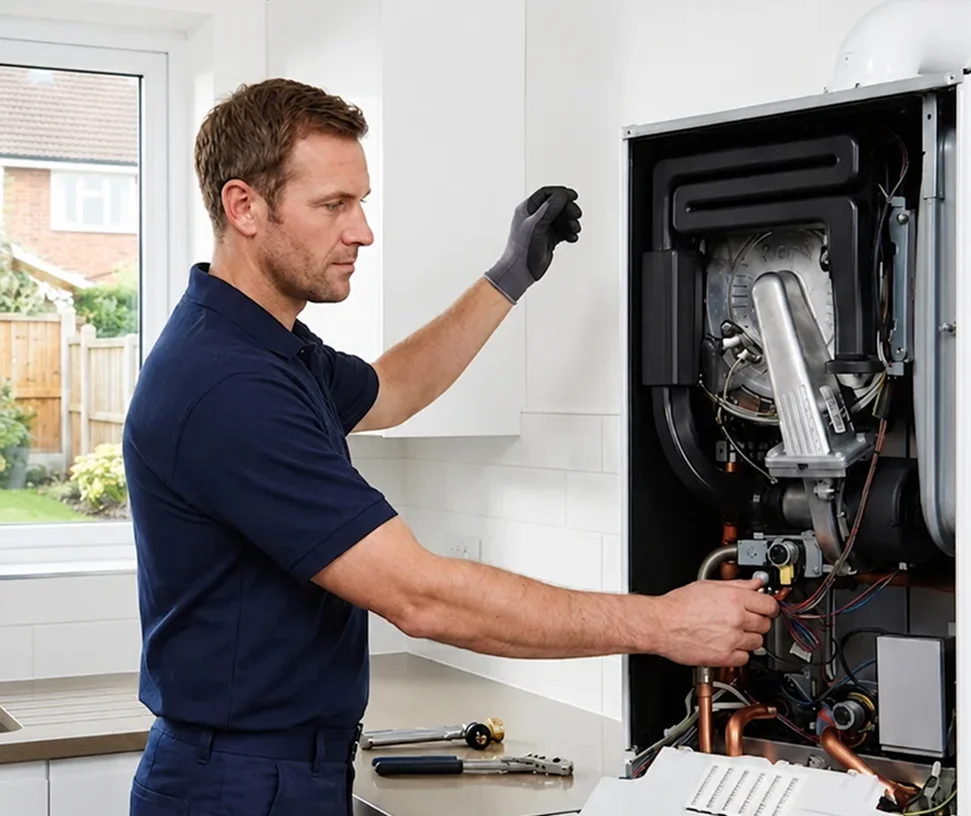
A boiler breakdown rarely happens at a convenient time. When heating or hot water suddenly stops working, the immediate priority is usually getting the system operating again. That urgency can make it tempting to accept the first price offered without asking many questions.
However, understanding the likely emergency boiler repair cost can help you make a calmer and more informed decision. The right approach is not necessarily to find the cheapest emergency call-out. It is to understand what the engineer has diagnosed, what the repair involves and whether the proposed solution addresses the actual problem.
Good advice can reduce the risk of paying for unnecessary work or making a rushed replacement decision.
If your boiler has stopped working unexpectedly, Valley Gas can help assess the problem and explain the appropriate next step. Contact our team for professional guidance when you need it.
What can affect the cost of an emergency boiler repair?
There is no single price that applies to every boiler breakdown. The final charge can depend on the nature of the fault and what is required to resolve it.
Factors can include:
- Time of the call-out
- Type of boiler
- Fault diagnosed
- Parts required
- Labour involved
- Availability of replacement components
- Complexity of the repair
- Whether further investigation is needed
- Whether the boiler is repairable
An emergency visit can also involve different charges from a routine appointment, depending on the service provider’s pricing structure.
This is why asking what the quoted charge includes is important before authorising work.
Why is diagnosis particularly important during an emergency?
When a boiler is not working, it can be difficult to determine the cause from symptoms alone.
For example, a boiler may fail to ignite, lose pressure, shut down unexpectedly or display an error code. Several underlying issues can produce similar symptoms.
An engineer should investigate the fault rather than simply replacing the first component that appears to be associated with the error.
What should an emergency assessment establish?
| Area | What it helps determine |
| Boiler symptoms | Establishes what has gone wrong |
| Fault codes | Identifies possible fault areas |
| System pressure | Can reveal pressure-related issues |
| Heating operation | Shows whether central heating is affected |
| Hot water operation | Helps narrow the fault |
| Previous repairs | Provides useful background |
| Appliance condition | Helps assess repair viability |
| Parts availability | Can affect the repair timeline |
| Safety concerns | Determines whether the appliance can be operated safely |
A good diagnosis gives the homeowner a clearer basis for deciding whether to repair the appliance immediately or consider another option.
Does an emergency call-out always mean an expensive repair?
No. The fact that an engineer is attending urgently does not automatically mean the repair itself will be expensive.
Some faults may involve a relatively straightforward adjustment or replacement component. Others can require more extensive investigation or parts.
The important distinction is between the cost of attending and the cost of resolving the problem.
Ask the engineer to explain:
- What the call-out charge covers
- Whether diagnosis is included
- What the repair is expected to cost
- Whether parts are included
- Whether further work may be necessary
- Whether the repair can be completed during the visit
Clear answers can help avoid misunderstandings.
https://valleysgasltd.co.uk/boiler-repair-newport-why-diagnosis-quality-affects-your-next-step
What if the engineer cannot complete the repair immediately?
Some repairs cannot be completed during the first visit.
The required part may not be available, additional investigation may be needed, or the fault may involve several components.
In that situation, the engineer should explain:
- What has been diagnosed.
- Why the repair cannot yet be completed.
- Which part or work is required.
- Whether the boiler can safely remain in use.
- What the next step will be.
- What additional costs may apply.
If the appliance is unsafe to operate, the engineer should explain the situation clearly and advise what should happen next.
Which fuel powers your boiler?

Mains Gas
LPG

Other
It just takes 60 Sec
And then you can book a free consultation
Should you repair or replace the boiler after an emergency breakdown?
An emergency breakdown does not automatically mean the boiler needs replacing.
The decision depends on factors such as:
- Age of the appliance
- Previous repair history
- Current condition
- Cost of the proposed repair
- Availability of parts
- Reliability
- Efficiency
- Whether the boiler still meets household requirements
For a relatively new boiler with a straightforward fault, repair may be the obvious choice.
For an older appliance with repeated failures and significant repair costs, replacement may be worth considering.
The important point is to avoid making a major replacement decision solely because the boiler has stopped working at an inconvenient time.
If you are facing a breakdown and have been told that replacement may be necessary, Valley Gas can discuss the situation with you. Understanding the condition of the existing boiler can help you decide what makes sense next.
How can homeowners reduce unnecessary emergency repair costs?
Preparation can make an unexpected breakdown easier to manage.
If the boiler stops working, safely record useful information before contacting an engineer.
You can note:
- Boiler make and model
- Fault code displayed
- Whether heating is working
- Whether hot water is working
- Any unusual noises
- Whether the pressure appears abnormal
- When the problem started
- Whether the fault has happened previously
Do not attempt to remove covers or interfere with gas components.
Providing accurate information can help the engineer understand the problem more quickly.
What questions should you ask before approving an emergency repair?
Even during an urgent situation, it is reasonable to ask a few straightforward questions.
Ask:
- What is the likely cause of the fault?
- Has the problem been properly diagnosed?
- What parts are required?
- How much will the repair cost?
- Is labour included?
- Is the repair expected to resolve the issue?
- Is the boiler safe to continue using?
- Would replacement be worth discussing given its condition?
A professional engineer should understand that homeowners need clear information before agreeing to significant expenditure.
A typical Newport emergency breakdown
Imagine a homeowner in Newport whose boiler stops working on a cold morning. The display shows an unfamiliar fault code, and there is no heating or hot water.
The homeowner contacts an engineer and explains the symptoms. Rather than immediately recommending a replacement, the engineer investigates the appliance and checks the relevant system conditions.
The fault is identified as a repairable issue. The homeowner receives an explanation of the problem, the required repair and the expected cost before work proceeds.
The repair is completed, and the boiler is tested.
The key lesson is that urgency does not remove the need for proper diagnosis. Even when a quick solution is needed, homeowners should understand what they are paying for.
What are warning signs when dealing with an emergency repair?
Urgent situations can create pressure, but homeowners should still expect reasonable transparency.
Be cautious if someone:
- Gives a price without investigating the fault
- Immediately insists on replacement without explaining why
- Cannot explain what the repair involves
- Adds unexpected charges without explanation
- Pressures you to approve work immediately
- Refuses to provide details of the proposed repair
- Makes claims about safety without explaining the underlying issue
An emergency should be handled efficiently, but efficiency should not mean skipping important information.
How can you judge whether a repair is worthwhile?
There is no universal percentage or age rule that determines when repair stops being sensible.
Instead, consider the overall picture.
A useful way to think about it is:
Repair cost + boiler condition + repair history + likely future reliability
If a modest repair could restore an otherwise reliable boiler, it may make sense.
If the appliance has suffered repeated failures and another expensive repair is unlikely to provide long-term confidence, replacement may deserve consideration.
The decision should be based on evidence rather than pressure.
Why Proper Diagnosis Matters Before You Decide
An unexpected breakdown can make homeowners feel pressured to make quick decisions, but the need for urgent heating does not remove the importance of proper diagnosis.
Understanding emergency boiler repair cost means asking what the initial charge covers, what has actually been diagnosed and whether the recommended repair is appropriate for the condition of the appliance.
A clear assessment can also help you decide whether repair is sensible or whether replacement should be considered.
Valley Gas takes a practical approach to boiler problems, with clear explanations designed to help homeowners understand their options. If you need assistance with a boiler fault, contact our team for professional guidance.
Related articles
Which fuel powers your boiler?
Mains Gas
LPG
Other
Which fuel powers your boiler?
Mains Gas
LPG
Other


