
Is Your Newport Boiler Nearing the End? Signs to Check Before Winter
Not sure if your boiler will make it through another winter? Learn the warning signs that it may be time to replace your Newport boiler before colder weather arrives.

Why you can trust our content
We understand that the boiler industry can be confusing, with plenty of outdated or misleading information. That’s why we rely only on trusted, proven sources to guide our advice and installations:
At a glance
As temperatures begin to fall, your boiler becomes one of the hardest-working appliances in your home. The last thing any homeowner wants is to wake up on a freezing morning to find there’s no heating or hot water. While some boiler problems can be repaired, others are clear indicators that your system is reaching the end of its lifespan.
Recognising the early warning signs gives you time to plan rather than rushing into an emergency decision. Replacing an ageing boiler before winter often means less stress, greater choice and a smoother installation process. Whether your property is modern or a traditional family home, understanding what to look for can help you avoid unexpected breakdowns.
If you’re unsure whether your current system is still reliable, our team at Valley Gas can assess its condition and provide honest advice. If replacement is the better option, we can discuss the most suitable boiler installation Newport homeowners can depend on.
How Long Should a Domestic Boiler Last?
Most modern gas boilers have an expected lifespan of around 10 to 15 years when serviced regularly. Some may continue working beyond this, but efficiency, reliability and availability of replacement parts often begin to decline.
Several factors influence how long a boiler lasts, including:
- Annual servicing
- Water quality within the heating system
- Frequency of use
- Correct installation
- General maintenance
An older boiler isn’t automatically unsafe, but ageing components naturally wear over time, increasing the likelihood of faults.
Could Strange Noises Mean Your Boiler Is Wearing Out?
Boilers are rarely completely silent, but new or unusual sounds deserve attention.
Listen out for:
- Banging noises
- Whistling
- Gurgling
- Vibrating pipework
- Repeated clicking during ignition
These sounds can indicate:
| Noise | Possible Cause |
| Banging | Limescale or overheating |
| Whistling | Restricted water flow |
| Gurgling | Air trapped in the system |
| Clicking | Ignition or burner issues |
| Vibrating | Loose internal components |
While some problems are relatively minor, repeated noises combined with other faults often suggest the boiler is becoming less reliable.
Is Your Heating Becoming Less Reliable?
One of the earliest signs of an ageing boiler is inconsistent performance.
You may notice:
- Radiators taking much longer to warm up
- Cold spots on radiators
- Hot water temperatures changing unexpectedly
- Heating switching itself off
- Pressure dropping regularly
Although these symptoms sometimes relate to the wider heating system, repeated issues should always be investigated before winter arrives.
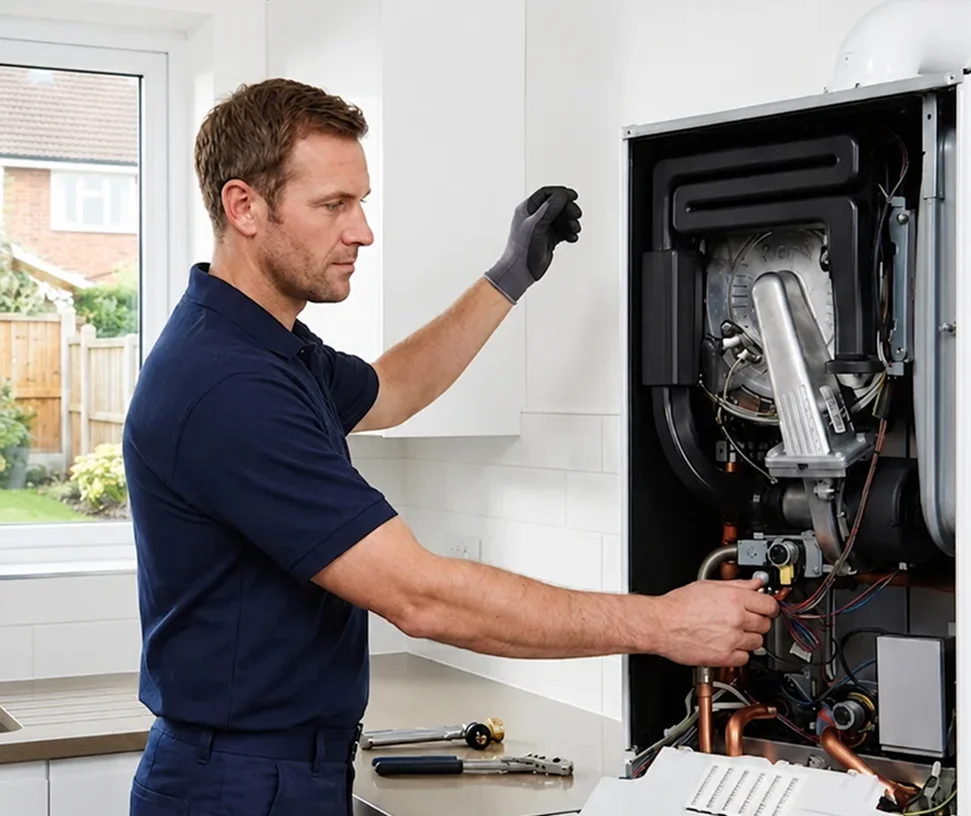
A qualified boiler fitter Newport residents trust can determine whether repairs remain worthwhile or whether replacement provides better long-term value.
Why Are Your Energy Bills Increasing?
Many homeowners assume rising energy costs are entirely due to changing tariffs. While prices certainly play a part, an inefficient boiler can also contribute significantly.
As boilers age, they generally become less efficient because:
- Burners wear down
- Heat exchangers deteriorate
- Internal seals weaken
- Components no longer operate as efficiently
The boiler must work harder to produce the same level of warmth, using more gas in the process.
If you’ve noticed steadily increasing fuel bills without a major change in your heating habits, your boiler may be losing efficiency.
Which fuel powers your boiler?

Mains Gas
LPG

Other
It just takes 60 Sec
And then you can book a free consultation
What Happens If Spare Parts Become Difficult to Find?
Manufacturers eventually stop producing replacement parts for older models.
This creates several challenges:
- Repairs take longer
- Parts become more expensive
- Temporary fixes become more common
- Engineers may recommend replacement instead
If every repair involves searching for discontinued components, replacing the boiler often becomes the more practical option.
Should You Keep Repairing an Older Boiler?
This is one of the most common questions homeowners ask.
A simple way to think about it is to compare the frequency and cost of repairs against the age of the appliance.
| Boiler Condition | Usually Worth Repairing? |
| Under 8 years old with first fault | Usually yes |
| 10 to 15 years old with repeated faults | Often depends |
| Over 15 years old needing expensive parts | Replacement is often more sensible |
Every home is different, which is why professional advice is valuable before making a decision.
If you’re weighing up repair versus replacement, Valley Gas can inspect your system and explain your options without pressure. We aim to help homeowners choose the solution that’s right for their property.
Are You Constantly Resetting Your Boiler?
Needing the occasional reset isn’t unusual.
However, if you’re resetting the boiler every few days or every week, this usually points towards an underlying issue.
Frequent resets may indicate:
- Sensor faults
- Electrical issues
- Pressure problems
- Ignition faults
- Failing internal controls
Although some of these problems can be repaired, recurring faults often become increasingly common as boilers age.
A Typical Newport Home Scenario
Imagine a family living in a semi-detached property that’s around 20 years old.
Their boiler still works, but over the last year they’ve noticed several changes:
- Hot water occasionally runs cold
- The heating takes much longer to warm the house
- Annual servicing has identified worn components
- Repair bills have gradually increased
Rather than waiting for a complete failure during January, they arrange an inspection before winter. After reviewing the condition of the system, they decide that replacing it before the cold weather arrives provides greater peace of mind and avoids the inconvenience of an emergency breakdown.
Planning also gives homeowners more flexibility when arranging installation dates.
What Should You Do Before Winter Arrives?
Preparing early offers several advantages.
Consider the following checklist:
- Book an annual boiler service.
- Monitor heating performance.
- Check for unusual noises.
- Watch for recurring fault codes.
- Keep an eye on pressure levels.
- Ask whether replacement parts remain available.
- Discuss future options with a heating professional.
Taking these simple steps can help you avoid unexpected disruption during the colder months.
If replacement is recommended, arranging boiler installation Newport before peak winter demand often provides greater flexibility and allows you to make a considered decision rather than an urgent one.
How Can a Professional Assessment Help?
Many boiler problems look similar from the outside.
An experienced boiler fitter Newport can assess:
- Overall condition
- Efficiency
- Safety
- Remaining lifespan
- Repair history
- Cost-effectiveness of future repairs
This allows you to make an informed decision based on your home’s needs rather than guessing whether another repair will solve the problem.
Preparing Early Can Save Time, Money and Stress
Boilers rarely fail without giving some warning. Strange noises, rising energy bills, recurring faults and unreliable heating are all signs that deserve attention before winter arrives. Acting early gives you time to explore your options without the pressure of losing heating during cold weather.
If you’re concerned that your boiler may be approaching the end of its lifespan, contact Valley Gas for straightforward advice. Whether your system needs servicing or it’s time to consider boiler installation in Newport, our experienced team is here to help you make a confident and informed decision.
Related articles
Which fuel powers your boiler?
Mains Gas
LPG
Other
Which fuel powers your boiler?
Mains Gas
LPG
Other


